Ease Medical Apparatus And Instruments
Why Choose Locking Plates for Global Buyers?
Global demand for orthopedic trauma devices is shaped by aging populations, road injuries, sports activity, and expanding surgical access. Grand View Research’s Orthopedic Implants Market report identifies trauma fixation as a continuing growth area. Fortune Business Insights also links market expansion with rising fracture treatment needs and improved implant technology. These reports provide direction, not a purchasing decision.
A Locking Plate connects with fixed-angle screws, creating a more stable construct around difficult fractures. This feature can support fixation in osteoporotic bone, periarticular regions, and comminuted injuries. Surgeons often value its angular stability when conventional compression is less suitable. The practical detail matters: plate contour, screw compatibility, instrument handling, and radiographic visibility can affect operating-room efficiency. Small differences become visible during a long procedure.
Global buyers need more than a catalog price. They need material certificates, validated manufacturing processes, sterilization information, traceability, and consistent supply. ISO 13485 quality-system guidance and regulatory frameworks from the FDA and European Union provide important reference points. However, compliance does not automatically prove clinical superiority. Evidence must match the intended anatomy, fracture pattern, and surgical technique.
The evidence is useful, but not perfect. Market reports may combine different product categories and regional assumptions. Hospitals should therefore compare published data with surgeon feedback, failure records, training support, and total ownership costs. A reliable supplier explains limitations clearly. That honesty can matter as much as a polished product brochure. For global procurement teams, the strongest choice is usually a Locking Plate supported by verified quality, practical usability, and transparent technical evidence.
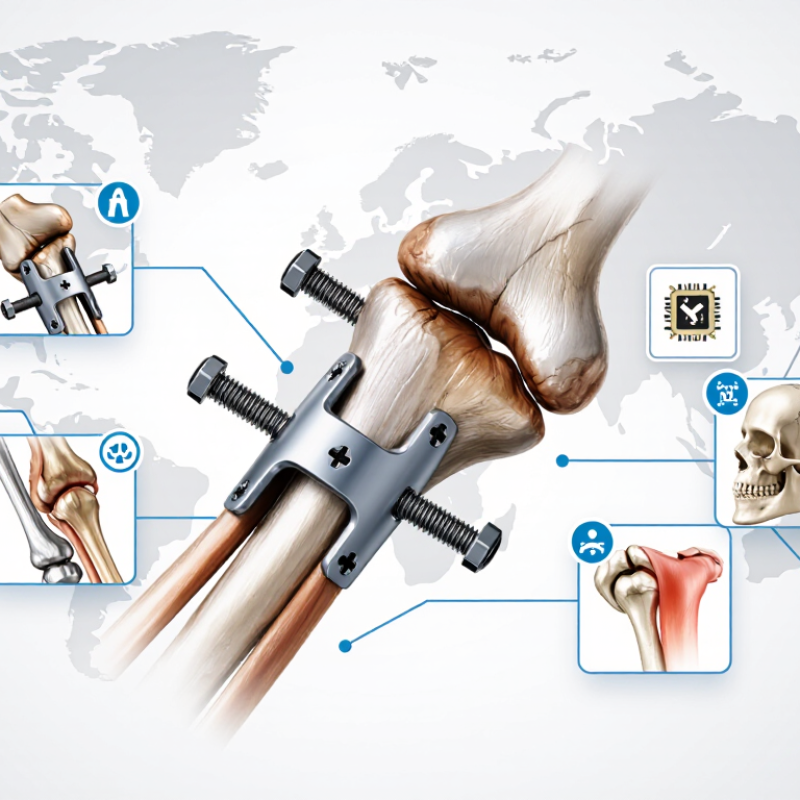
Locking plates are orthopedic implants designed to stabilize fractured bones. They use threaded holes that accept locking screws. The screw head locks into the plate instead of pressing the plate tightly against the bone. This creates a fixed-angle construct, which can improve stability around complex fractures or weaker bone.
The mechanism is practical. The plate supports alignment, while each locked screw helps resist movement. Because the construct does not depend entirely on plate-to-bone pressure, it may preserve more blood flow beneath the plate. Still, they are not magic. A plate can be technically excellent and remain unsuitable for a specific fracture. Surgical planning, bone quality, plate position, and screw length all affect performance.
For global buyers, reliable evaluation should include material, dimensions, hole configuration, sterile packaging, and traceability records. Common materials include surgical stainless steel and titanium alloys, but specifications must match the intended procedure. Buyers should also review mechanical testing, quality documentation, and compatibility with approved instruments. In practice, small details matter. A poorly fitting plate can complicate surgery and increase handling time. The weak point is often not the product alone, but unclear technical information or inconsistent supply. Clear drawings, lot records, and responsive support help clinical teams make safer decisions.
Why Choose Locking Plates for Global Buyers?
Why Locking Plates Support Stable Fracture Fixation
Locking plates create a fixed-angle connection between the screw head and plate hole. This design can maintain alignment when bone quality is poor or fragments are small. AO Surgery Reference identifies this principle as useful in metaphyseal and comminuted fractures. The plate acts like an internal support frame. It does not rely entirely on plate-to-bone compression.
The need is substantial. The Global Burden of Disease Study 2019 estimated 178 million new fractures worldwide in one year. Many involve older adults with reduced bone density. Stability matters during early movement. A 2021 systematic review in Injury reported that locking constructs may reduce fixation loss in selected osteoporotic fractures, although results vary by fracture location and technique.
Fit matters.
Global purchasing teams should examine hole geometry, screw options, material quality, and surgical instrumentation. Clear technical documentation also supports safer training across different hospitals. However, locking plates are not automatically superior. Excessive stiffness may reduce useful micromotion, while poor contouring can irritate soft tissue. That assumption is too simple.
Clinical experience shows that reduction quality remains critical. A stable implant cannot correct inaccurate fracture alignment. The surgeon must select the construct according to bone condition, fracture pattern, and loading demands. Evidence is still uneven across anatomical regions, so procurement decisions should consider independent testing, peer-reviewed data, and local surgical expertise.
Locking plates offer fixed-angle support for fractures with poor bone quality, metaphyseal comminution, or unstable fragments. Their screws lock into the plate, creating a stable internal framework instead of relying only on screw-to-bone compression. This can help maintain alignment when conventional fixation may lose purchase. In the AAOS/ASSH 2020 Clinical Practice Guideline, operative fixation for suitable distal radius fractures was associated with better early radiographic and functional outcomes, although long-term differences were often limited. Early motion matters.
The surgical advantage is practical. A surgeon can place screws at planned angles and support small articular fragments through a relatively controlled exposure. Stable fixation may allow earlier wrist, ankle, or limb rehabilitation, depending on the fracture and soft-tissue condition. A 2022 systematic review in the Journal of Orthopaedic Trauma found that locking constructs commonly improved early function in complex fractures, but complication rates varied by anatomy and technique. Not every fracture needs a locking plate.
That distinction is important. Excessive stiffness, tendon irritation, screw penetration, and infection remain possible. The AO Foundation emphasizes accurate reduction, appropriate plate positioning, and careful postoperative monitoring. In real operating rooms, implant choice is rarely perfect. Bone density, fracture pattern, surgeon experience, and rehabilitation access can change the result. The best purchasing decision therefore considers clinical evidence, instrumentation reliability, sterilization requirements, and training support—not only the plate’s locking mechanism.
Global buyers need locking plates that perform consistently across different fracture patterns, surgical settings, and supply chains. The World Health Organization reports that approximately 1.71 billion people live with musculoskeletal conditions worldwide. This demand makes reliable trauma fixation increasingly important. Locking plates provide angular stability through threaded screw-plate connections. That design can support fixation in osteoporotic bone and complex fractures. Surgeons also value reduced plate-bone compression, especially when preserving local blood supply matters.
Purchasing teams usually examine more than mechanical strength. They review material certificates, fatigue testing, sterilization compatibility, and traceability records. ASTM F382 outlines methods for evaluating metallic bone plates under bending loads. ISO 13485 also supports controlled quality systems for medical device production.
These references help buyers compare suppliers using evidence, not attractive catalog language. The Global Orthopedic Implants Market report by Grand View Research projected continued market growth through 2030, reflecting broader demand for dependable orthopedic products and documented quality.
Practical details matter.
A useful system should offer clear size ranges, readable markings, compatible instruments, and stable packaging. Regional distributors may also require predictable lead times and multilingual technical documents. However, locking plates are not automatically the best choice for every fracture. Their higher screw-plate rigidity may increase cost and complicate revision procedures. That limitation deserves attention.
Experienced buyers should request fatigue data, clinical feedback, and failure analysis before approving large orders. A polished brochure is not enough. Surface finish, hole accuracy, and instrument fit can decide whether a promising system works smoothly in a real operating room.
Before selecting locking plates, global buyers should inspect the evidence behind each specification. Confirm the alloy, mechanical properties, hole geometry, screw-locking mechanism, and surface finish. Stainless steel and titanium behave differently during bending, imaging, and sterilization. Ask for material certificates, dimensional inspection records, and batch traceability. ASTM F382 provides recognized methods for testing bone-plate bending and fatigue performance. A supplier should share results from comparable plate designs, not only a general laboratory certificate.
Clinical fit matters as much as laboratory strength. Check whether the plate supports the fracture patterns treated in your market, including small fragments and poor bone quality. The 2023 Grand View Research report estimated the global orthopedic implants market at approximately USD 52.5 billion, showing strong demand but also intense product variation. Market growth does not prove clinical value. Request peer-reviewed evidence, reported complication data, and post-market surveillance records. I would not accept a polished brochure as evidence.
Compatibility is often overlooked. Confirm screw diameter, thread design, instrumentation, sterilization limits, and imaging requirements. Ask whether instruments remain functional after repeated processing. Review the supplier’s quality system, inspection frequency, corrective-action history, and delivery records. ISO 13485 certification is useful, but certification alone is not enough. Audit the process when possible. A small documentation gap can become a serious traceability problem. The uncomfortable question is simple: can the supplier explain what happens when one batch fails?
| Buyer Checkpoint | Why It Matters | Common Technical Options or Data | Evidence Buyers Should Request | Selection Advice |
|---|---|---|---|---|
| Locking mechanism | A threaded or otherwise locking interface fixes the screw head to the plate and can provide a fixed-angle construct. | Threaded holes, hybrid locking/compression holes, and system-specific fixed-angle screw options. | Hole design drawings, compatible screw specifications, insertion instructions, and mechanical test data. | Confirm that the plate and screw threads are designed and validated as one compatible system. |
| Material grade | Material affects strength, corrosion resistance, imaging characteristics, and biological compatibility. | Implant-grade titanium and titanium alloys; implant-grade stainless steel such as the grades covered by ISO 5832-1. | Material certificate, chemical composition, mechanical properties, heat-treatment records, and traceability documents. | Do not accept “medical metal” as a sufficient specification; require the exact grade and applicable standard. |
| Applicable standards | Standards help define material quality, dimensional control, mechanical testing, and quality-system expectations. | ASTM F382 for metallic bone plates; ASTM F543 for metallic medical bone screws; ISO 13485 for medical-device quality management. | Declaration of conformity, test reports, quality certificates, and the standards edition used for testing. | Check whether the documentation matches the destination market and the intended device classification. |
| Plate dimensions | Length, width, thickness, contour, and hole spacing determine anatomical fit and fixation capacity. | Common screw families include approximately 2.4 mm, 2.7 mm, 3.5 mm, and 4.5 mm systems; actual plate dimensions are system-specific. | 2D drawings, 3D CAD files, dimensional inspection reports, and tolerance information. | Select dimensions according to anatomy, fracture pattern, required fixation points, and surgical technique. |
| Plate contour and flexibility | Anatomical contour can reduce intraoperative bending and help maintain the intended fixation geometry. | Pre-contoured or straight designs; limited contouring may be permitted depending on the system. | Bending instructions, allowable bending zones, contouring-tool specifications, and validation data. | Avoid unapproved bending near locking holes because it may affect hole geometry and screw engagement. |
| Surface finish | Surface condition influences cleanliness, corrosion behavior, tissue interaction, and inspection results. | Machined, polished, blasted, or passivated surfaces, depending on material and design requirements. | Surface-treatment specification, roughness data where applicable, corrosion testing, and visual inspection criteria. | Require consistent finishing without burrs, sharp edges, embedded particles, or visible machining defects. |
| Mechanical performance | The construct must withstand expected loading during healing without unacceptable deformation or failure. | Bending strength, bending stiffness, fatigue performance, screw pull-out behavior, and plate-screw construct performance. | Test method, sample size, acceptance criteria, raw or summarized results, and comparison with the intended use. | Compare products only when plate geometry, material, screw size, test setup, and loading conditions are equivalent. |
| Biocompatibility | Implant materials and residual manufacturing substances must be assessed for biological safety. | Evaluation may include cytotoxicity, sensitization, irritation, systemic toxicity, and other endpoints relevant to the device. | Biological evaluation report, material composition, cleaning validation, and applicable ISO 10993 assessment. | Confirm that the assessment covers the final finished device, not only the raw material. |
| Sterilization status | Sterile and non-sterile products require different packaging, labeling, validation, and hospital handling procedures. | Supplied sterile or supplied non-sterile for validated reprocessing or sterilization before use. | Sterilization validation, packaging validation, sterility assurance information, shelf-life data, and reprocessing instructions. | Ensure the sterilization method is compatible with the packaging and destination-country requirements. |
| Instrument compatibility | Locking plates require compatible drills, guides, screwdrivers, depth gauges, and insertion instruments. | System-specific instrument interfaces, driver sizes, drill diameters, and guide designs. | Instrument list, compatibility matrix, surgical technique guide, and replacement-part availability. | Purchase the complete compatible system rather than evaluating the plate alone. |
| Packaging and traceability | Robust packaging protects the device from contamination, damage, and loss of identification during international transport. | Lot or batch number, catalog reference, manufacturing date, expiration date where applicable, and UDI information where required. | Packaging specifications, label artwork, transport validation, inspection records, and traceability procedure. | Check that labels, symbols, language, and documentation meet the importing market’s requirements. |
| Regulatory documentation | Regulatory clearance and technical documentation determine whether the product can legally be supplied and used. | Technical file, risk-management documentation, clinical evaluation, post-market procedures, and market-specific conformity documents. | Current certificates, declarations, registration details, instructions for use, and change-control records. | Verify document validity directly against the requirements of the destination country before placing an order. |
| Supply and customization | Reliable availability is important because locking plate systems require multiple sizes and matching instruments. | Standard sizes, anatomical variants, small-batch sampling, private-label documentation, and controlled custom design options. | Lead time, minimum order quantity, inventory policy, production capacity, quality agreement, and change-notification process. | Evaluate total lifecycle cost, including instruments, validation, logistics, training, and replacement components. |
Note: Dimensions, screw families, allowable bending, testing requirements, and regulatory documents are system- and market-specific. Buyers should verify the current technical file and applicable local regulations before purchase.
They create a fixed-angle connection between the screw head and plate hole. The plate works like an internal support frame. It does not depend entirely on bone compression. This can help maintain alignment around small or fragile fragments.
They may reduce fixation loss in selected fractures with poor bone quality. The threaded connection can improve screw stability. Results still vary by fracture location and surgical technique. Not every case benefits equally.
Poor contouring can irritate nearby soft tissue. An inaccurate fit may affect alignment and comfort. Check plate shape, thickness, hole position, and available sizes. Small differences matter.
Common metal choices behave differently during bending, imaging, and sterilization. Review alloy certificates and mechanical test results. Surface finish also deserves inspection. A shiny surface proves little.
Request dimensional records, fatigue data, material certificates, and batch traceability. Technical files should explain screw compatibility and sterilization limits. Failure analysis is valuable when previous problems exist. A polished brochure is not evidence.
Review peer-reviewed studies, complication reports, and post-market surveillance data. Evidence should match the fracture patterns treated locally. Market growth does not prove clinical usefulness. That assumption is too simple.
Confirm screw diameter, thread design, instrument fit, and plate markings. Check whether instruments remain functional after repeated sterilization. Imaging requirements should also be clear. Tiny mismatches can delay surgery.
Buyers should check packaging quality, delivery consistency, documentation languages, and lead times. Traceability should continue from production through hospital storage. Ask what happens when one batch fails. This question is uncomfortable, but necessary.
No. Higher rigidity can increase cost and complicate revision procedures. Excessive stiffness may reduce useful micromotion. Reduction quality remains critical. A stable implant cannot repair inaccurate alignment.
A Locking Plate is an orthopedic fixation device that uses threaded holes to secure compatible screws directly to the plate. This creates a fixed-angle structure that can help maintain alignment and support fracture stability, especially when bone quality is limited or soft-tissue preservation is important. Compared with conventional plate systems, locking plates can provide reliable fixation with less dependence on plate-to-bone compression, offering surgeons greater flexibility in managing complex fractures and supporting controlled healing.
For global buyers, locking plates may offer practical advantages such as consistent performance, multiple shapes and sizes, compatibility with different surgical approaches, and simplified inventory planning. Before selecting a product, buyers should review material quality, dimensional accuracy, screw compatibility, sterilization options, packaging integrity, documentation, and applicable regulatory requirements in the target market. Clear technical support, traceability, quality control, and dependable supply capacity are also essential factors when evaluating long-term purchasing suitability.
