Ease Medical Apparatus And Instruments Ease Medical Apparatus And Instruments

What Are the Top Cannulated Screw Implant Manufacturers?

Time:2026-10-30 Author:Amelia
0%

Choosing a Cannulated Screw Implant manufacturer is not just a brand exercise. Surgeons and procurement teams must consider the intended procedure, screw dimensions, material, instrumentation, and available clinical evidence. A cannulated screw’s hollow core allows it to pass over a guidewire, while its threads provide fixation at the target site. Under fluoroscopy, even small differences in trajectory or screw length can matter. Details count.

Surgeon and writer Atul Gawande wrote, “Better is possible.” That reminder offers a useful standard for comparing implant options, though it is not a device-specific endorsement. A careful review should look beyond product photographs and catalog language. It should examine design consistency, technical documentation, surgeon familiarity, supply reliability, and support for the complete instrument set. Hospitals may also need to consider local approvals and purchasing requirements.

This overview will examine manufacturers associated with cannulated screw systems and the factors that distinguish their offerings. It will not treat popularity as proof of clinical superiority. Product ranges, availability, and evidence can differ by market, and no ranking is perfect. Readers should verify current specifications and consult qualified orthopedic professionals before making clinical decisions. A screw that looks similar on a page may behave differently in practice. That deserves a closer look.
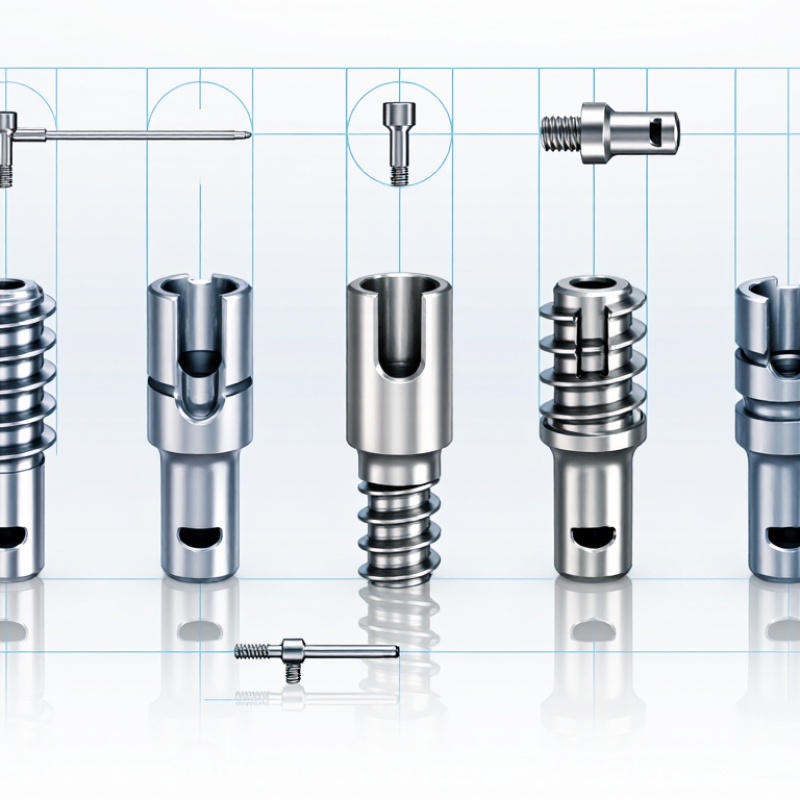
What Are the Top Cannulated Screw Implant Manufacturers?

What Cannulated Screws Are and Where They Are Used

Cannulated screws are hollow through the center, allowing a surgeon to pass them over a thin guidewire. The wire helps direct placement through a small incision, while imaging checks its path and the fracture alignment. Some designs can draw bone fragments together and provide compression. Others mainly hold a carefully positioned fragment. Small detail. Big consequence.

These screws are used in selected fractures of the femoral neck, scaphoid wrist bone, and ankle, as well as in some bone-realignment procedures. The best choice depends on fracture pattern, bone quality, and the patient’s condition; a hollow screw is not automatically the right tool. The American Academy of Orthopaedic Surgeons’ 2021 hip-fracture guideline lists internal fixation as an option for stable, impacted femoral-neck fractures, while leaving treatment decisions to clinical judgment. The guidewire is not a guarantee. It can shift, so placement still needs careful imaging and assessment. Grand View Research estimated the broader global orthopedic implants market at USD 47.2 billion in 2023; that figure includes many products, not cannulated screws alone.

How to Assess Cannulated Screw Implant Manufacturers

Assessing cannulated screw implant manufacturers starts with the device, not the catalog. Check whether the manufacturer provides dimensional tolerances, guidewire compatibility, thread specifications, material certificates, and batch inspection records. In the operating room, a screw that binds on a guidewire can disrupt reduction. Ask for test results across the stated diameter and length range, not just one sample size. Small details matter.

Grand View Research estimated the global orthopedic implants market at USD 48.5 billion in 2023, with a projected 4.3% annual growth rate from 2024 to 2030. This indicates a growing, competitive sector, not that any supplier is clinically superior. Request the scope of its ISO 13485 certification, sterilization validation, product traceability, and complaint or recall summaries. Review fatigue and corrosion data for the screw’s intended use. Where relevant, check material specifications against standards such as ASTM F136 for wrought titanium-6Al-4V ELI. Ask for clinical studies on the exact design. Marketing can look polished. Surgeon feedback can help, but it remains anecdotal and may not reveal uncommon failures.

Major Manufacturers and Their Product Portfolios

Manufacturers of cannulated screws generally fall into three groups: full-line orthopedic suppliers, trauma-focused producers, and specialist contract manufacturers. Their portfolios may include stainless-steel or titanium screws, multiple diameters and lengths, and partially or fully threaded designs. Some also supply guidewires, drill bits, depth gauges, and plates designed to work with their fixation systems. Small details matter: a low-profile head may sit closer to bone, while thread length affects how the screw grips across a fracture. Compatibility is not universal.

Fortune Business Insights estimated the global orthopedic implants market at USD 49.78 billion in 2023 and projected USD 69.09 billion by 2032. This broad market figure includes many implant types; it does not measure cannulated screws alone. Grand View Research’s orthopedic implants analysis likewise covers a wider product category, so neither report should be treated as a screw-specific market ranking. When comparing portfolios, buyers can check material specifications, available sizes, instrument sets, and published indications. Ask for the exact configuration. Catalog breadth can look impressive, but it does not prove that every size suits a particular fracture pattern. The evidence can be uneven.

How Design, Materials, and Quality Standards Compare

Cannulated screw manufacturers are best compared by how their designs address specific fixation needs. Thread length, pitch, core diameter, and head shape affect purchase, compression, and placement. A guidewire-compatible cannulation can support controlled insertion, but it also leaves less space for screw material. Small details matter. Compare documented design options for the intended anatomy rather than assuming one configuration suits every case.

Materials and quality controls deserve equal attention. Titanium alloys and stainless steels have different mechanical and imaging characteristics, so review the stated material grade and supporting technical documentation. Check whether manufacturing controls, inspection records, and quality certifications are clearly described and independently verifiable. Standards can help structure comparison, but a certificate alone does not prove that a particular screw fits a clinical need. A polished brochure is not enough; even detailed comparisons can miss practical handling differences.

Tips: Ask for dimensional drawings, material specifications, and evidence of traceability. Compare thread geometry and insertion tools side by side. If information is missing, record that uncertainty instead of treating it as a minor detail.

Cannulated Screw Materials: Representative Elastic Modulus

A material-property comparison relevant to implant design. Values are approximate Young’s modulus in GPa; actual values vary with grade, processing, and test direction. ASTM F136 and ASTM F138 specify implant-grade titanium and stainless steel, respectively; they do not rank manufacturers.

Representative reference values: Ti-6Al-4V ELI ≈110 GPa; 316L stainless steel ≈193 GPa; cortical bone ≈17 GPa. Bone is anisotropic, so its measured modulus varies substantially. Material properties alone do not determine implant quality or clinical performance.

Factors to Consider When Selecting a Manufacturer

Selecting a cannulated screw manufacturer requires more than comparing price and lead time. Check whether its quality system is certified to ISO 13485, and request material certificates, dimensional tolerances, and lot-level traceability. For titanium screws, verify the alloy specification and inspect test evidence for strength and fatigue performance. Ask how cannulation affects the screw’s load capacity. Small details matter.

Sterile packaging and process validation deserve close review. The World Health Organization’s 2016 Global Guidelines for the Prevention of Surgical Site Infection cite an estimated 11.8 infections per 100 surgical patients in low- and middle-income countries. This is not a screw-specific rate, but it underscores why validated sterilization and intact packaging matter. Request sterilization validation summaries, shelf-life evidence, and clear instructions for handling damaged packs. Also review clinical evidence, complaint handling, and how design changes are communicated. A polished brochure proves little. No checklist removes every risk; compare actual records, and note where evidence is missing or difficult to interpret.

What Are the Top Cannulated Screw Implant Manufacturers? - Factors to Consider When Selecting a Manufacturer
Selection Factor What to Assess Evidence to Request or Verify Suggested Weight
Regulatory status and quality system Confirm that the specific screw system is authorized for sale in the intended market and that the manufacturer maintains an appropriate medical-device quality management system. Applicable market authorization or registration; current quality-system certificate, where applicable; scope and validity dates; documented change-control and complaint-handling processes. 20%
System range and clinical fit Assess whether the available screw designs, diameters, lengths, thread configurations, and guidewire compatibility suit the intended procedures and patient population. Availability varies by system. Current product catalogue; dimensional specifications; compatibility information; intended-use and contraindication statements; documented product-change history. 15%
Materials and biological safety Review the implant material, surface condition, and any coatings or treatments. Common implant materials include titanium alloys and stainless steels; suitability depends on the device design and applicable requirements. Material specifications and traceability; biological-safety evaluation relevant to the device’s contact type and duration; information on coatings, cleaning, and corrosion testing where applicable. 15%
Manufacturing controls and traceability Evaluate controls for machining, cannulation, thread formation, inspection, cleaning, packaging, and lot traceability. Ask how critical dimensions and manufacturing changes are controlled. Quality-system audit evidence; inspection and process-validation summaries; sample device and packaging records; lot or serial-number traceability process; nonconformance and corrective-action procedures. 15%
Performance and supporting evidence Determine whether mechanical and clinical evidence supports the intended use. Consider relevant testing of strength, fatigue, and system-specific performance; avoid relying on marketing claims alone. Test summaries and methods; risk-management documentation; relevant clinical evaluation or published evidence; clear explanation of the evidence’s relevance to the proposed device and indication. 15%
Instrumentation and workflow Check that guidewires, drill guides, depth gauges, drivers, and other instruments are compatible, clearly identified, and practical for the intended surgical workflow. Instrument compatibility matrix; instructions for use; cleaning, disinfection, and sterilization instructions for reusable instruments; training and instrument-set availability. 10%
Supply continuity and delivery Assess stock availability, lead times, order fulfillment, and contingency arrangements for commonly used sizes and instruments. Written service levels; historical delivery or fill-rate data; back-order communication process; inventory and continuity plans appropriate to the purchasing arrangement. 5%
Technical support and total cost Consider training, clinical or technical support, complaint response, and the total cost of implants, instruments, reprocessing, and replacement—not just unit price. Support and escalation contacts; training plan; warranty and service terms; itemized pricing; instrument maintenance and replacement costs. 5%
Total suggested weighting 100%

Comparison method: Score each manufacturer’s relevant system from 1 (insufficient evidence or poor fit) to 5 (strong fit with verifiable evidence), then apply the suggested weights. Confirm requirements for the intended market, procedure, and device; regulatory and technical requirements vary by jurisdiction and product.

FAQS

What is a cannulated screw?

It has a hollow center, allowing placement over a thin guidewire. Imaging helps the surgeon check its path and the bone fragments’ alignment. Small detail.

Where are cannulated screws used?

They may be used for selected fractures of the femoral neck, scaphoid wrist bone, or ankle. They can also support some bone-realignment procedures.

Do these screws always compress bone fragments?

No. Some designs draw fragments together and provide compression. Others mainly hold a carefully positioned fragment.

Does using a guidewire guarantee accurate screw placement?

No. A guidewire can shift, so placement still requires careful imaging and assessment. It is a guide, not a guarantee.

How is the right screw design selected?

The fracture pattern, bone quality, anatomy, and patient’s condition all matter. Thread length, pitch, core diameter, and head shape can affect fixation. One design may not suit every case.

What information should buyers request from a manufacturer?

Request dimensional drawings, guidewire compatibility, thread specifications, material certificates, and batch inspection records. Ask for test results across the stated size range, not just one sample.

What quality evidence is useful when comparing manufacturers?

Review traceability, sterilization validation, inspection records, and complaint or recall summaries. Clinical studies on the exact screw design can help. A certificate alone proves little about clinical fit.

How should materials and real-world handling be compared?

Review the stated material grade and supporting technical documents. Compare insertion tools and thread geometry side by side. Paperwork can miss handling differences; I may be giving it too much weight.

Conclusion

Cannulated screws are hollow-centered orthopedic implants designed to guide precise placement over a wire, helping stabilize selected fractures and support bone fixation. Choosing a Cannulated Screw Implant manufacturer requires more than comparing product availability: healthcare professionals should assess the range of screw sizes and configurations, the suitability of designs for intended procedures, and the clarity of technical documentation.

Manufacturers may differ in materials, thread patterns, head designs, instrumentation, and manufacturing controls. Comparing these features alongside applicable quality standards can help clarify how products meet clinical and operational needs. Selection should also consider compatibility with surgical workflows, product consistency, supplier support, and the availability of reliable information for evaluation. A careful, needs-based comparison can help organizations identify an appropriate manufacturer while keeping patient safety and intended use at the center of the decision.

Amelia

Amelia

Amelia is a seasoned marketing professional with a wealth of expertise in our company’s core offerings. With an unwavering passion for driving growth and innovation, she plays a pivotal role in shaping our marketing strategies and enhancing brand visibility. A key aspect of her responsibilities......