Ease Medical Apparatus And Instruments Ease Medical Apparatus And Instruments

Top 10 Sternal Fixation Implant Manufacturers in China

Time:2026-11-20 Author:Madeline
0%

Sternal fixation is a small component with a major job: keeping the divided breastbone stable while healing begins. The American Association for Thoracic Surgery’s 2016 clinical practice guideline describes sternal wound infections as an “uncommon but devastating complication of cardiac surgery.” Its review reports incidence estimates ranging from 0.5% to 5%, reflecting differences in patients, procedures, and definitions. The range is wide. That uncertainty matters when comparing implant designs or manufacturer claims.

This Top 10 Sternal Fixation Implant Manufacturers in China overview focuses on details buyers can verify: implant materials, plate and wire configurations, manufacturing capabilities, quality documentation, and clinical-use information. A product photograph cannot show how a plate sits against a curved sternum, or how easily a surgeon can handle screws in a confined operative field. Those details deserve scrutiny. The Society of Thoracic Surgeons’ Adult Cardiac Surgery Database offers an important clinical context for cardiac-surgery outcomes, but it is not a direct ranking of implant brands or market share. We therefore distinguish clinical evidence from commercial descriptions rather than treating them as interchangeable.

Henry Lazar, lead author of the AATS guideline, captured the clinical stakes with the phrase, “uncommon but devastating.” This list is intended as a practical starting point, not an endorsement or a substitute for device-specific evaluation. Public information can also be uneven; some manufacturers disclose more than others. Readers should verify current specifications, relevant certifications, and evidence directly with each supplier before making procurement decisions.
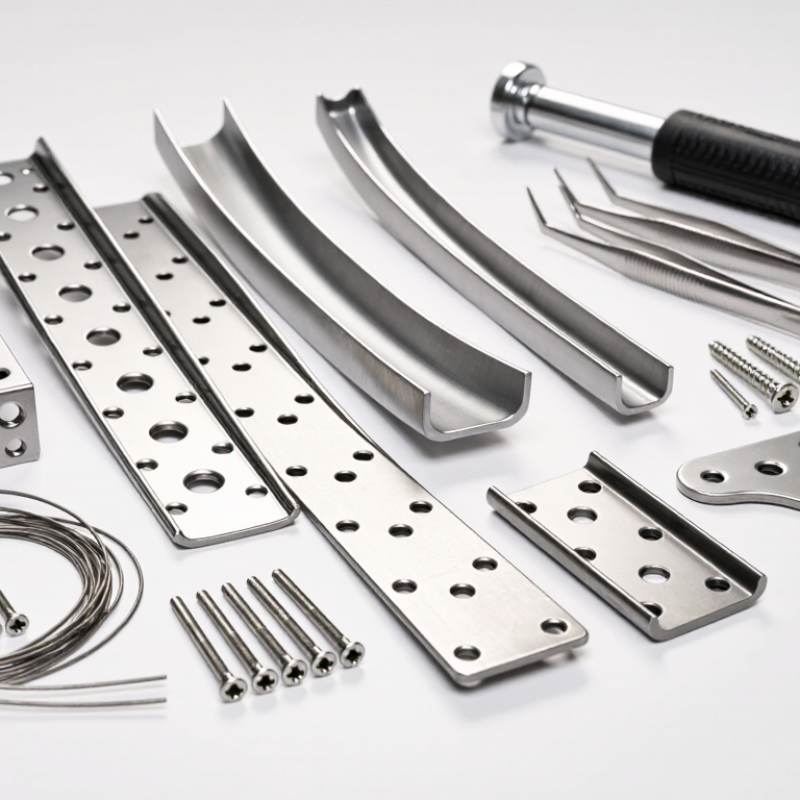
Top 10 Sternal Fixation Implant Manufacturers in China

What Sternal Fixation Implants Are and How They Function

The sternum, or breastbone, may be divided during open-heart surgery and needs support while it heals. Sternal fixation implants help hold the bone edges in position. Common options include metal wires, plates, and screws. They support the bone; they do not replace it.

Wires are tightened around the sternum to draw its sides together. Plates follow the chest’s contour, while screws anchor them to bone. This support can limit movement during breathing, coughing, and daily activity.

Small details matter. Bone quality, the incision, and a patient’s health can influence which approach a surgical team considers. The fit is not always straightforward.

Healing varies from person to person. A surgeon checks the wound and symptoms, and may use imaging when needed. Pain, infection, loosening, or delayed bone healing can occur, so implants are not a guarantee of uncomplicated recovery. Some details remain imperfect: even a well-positioned device cannot control every factor affecting healing. Patients should follow their care team’s instructions and report new or worsening symptoms.

Common Implant Types and Their Clinical Applications

Sternal fixation implants serve different purposes after sternotomy, fracture, or reconstruction. Stainless-steel wires remain common for routine closure, passing through or around the sternum. They are low-profile and familiar to cardiac teams. But stability can be limited when bone is fragile or divided unevenly.

Rigid plates and screws spread load across the sternum. Surgeons may consider them for unstable fractures, revision surgery, nonunion, or patients at higher risk of dehiscence.

The American Association for Thoracic Surgery’s 2016 guidelines report deep sternal wound infection in roughly 0.5–2% of cardiac surgery patients.

Infection is not the only cause of poor healing, but it makes secure closure and follow-up important. Small screws, carefully placed, matter.

Cable systems can provide circumferential compression, while mesh or plate constructs may support larger defects after reconstruction. Choice depends on bone quality, wound condition, anatomy, and the operation performed.

Imaging and direct assessment help guide selection; no implant replaces sound surgical technique. The choice is not always neat.

Evidence comparing every fixation method remains uneven, so reported outcomes should be read with attention to patient risk and study design.

How China’s Sternal Implant Manufacturers Are Assessed

Assessing sternal fixation implant manufacturers in China requires more than comparing catalogues. A buyer should review documented quality controls, production records, and the ability to trace each implant lot to its raw material. Ask how titanium or other specified materials are verified, and whether inspection results are retained. Small details matter: a clear batch label, consistent dimensions, and legible instructions can affect hospital workflow.

Technical evaluation should cover implant design, instrument compatibility, and evidence supporting mechanical performance. Request test methods and reports, not just claims of strength. Check how changes to materials or manufacturing processes are reviewed. Current certificates and their stated scope should be verified with the issuing organization. This takes time. It is worth doing.

Factory assessment can include equipment calibration, staff training records, packaging controls, and sterilization documentation where applicable. Ask to see how nonconforming parts are isolated and investigated. A polished presentation is not proof of reliable production. Even a careful audit has limits; a single visit may not reflect everyday practice. Follow-up records and consistent responses to technical questions can help reveal gaps. Some evidence may remain incomplete, and that deserves an honest discussion rather than an easy assumption.

Top 10 Sternal Fixation Implant Manufacturers in China - How China’s Sternal Implant Manufacturers Are Assessed

The criteria below provide a transparent framework for assessing manufacturers. The weights are suggested editorial weights, not official industry rankings or verified scores for individual companies. Confirm current product registrations, certifications, and clinical evidence from authoritative records.

Assessment dimension Suggested weight Evidence to review Why it matters
Regulatory status and product registration 18% Current registration details for the specific sternal fixation product; verify status and intended use in applicable official records. Confirms that the product has an identifiable regulatory pathway for its intended market and use.
Quality management system 15% Valid quality-system certificates, their scope and expiry dates, and relevant audit or supplier-control documentation. A functioning quality system supports consistent manufacturing and traceable corrective actions.
Material specifications and traceability 12% Declared implant materials, material specifications, supplier controls, and lot-level traceability documentation. Material identity and traceability are central to evaluating implant quality and investigating product issues.
Mechanical performance and design verification 12% Product-specific design verification, mechanical test methods, acceptance criteria, and reports relevant to the intended use. Supports assessment of whether the fixation system has been tested against its design requirements.
Biological safety and risk management 10% Product-specific biological evaluation, risk-management records, and supporting test or assessment reports. Shows how potential biological and use-related risks have been identified and evaluated.
Sterilization and packaging validation 10% Sterilization method, validation and routine-control records, packaging integrity evidence, and stated shelf life. Verifies that sterile-product claims and packaging performance are supported by documented controls.
Clinical evidence and post-market monitoring 8% Relevant clinical evaluation or study information, complaint-handling procedures, and available post-market safety updates. Helps assess whether safety and performance are monitored beyond the manufacturing stage.
Product range and system compatibility 5% Current product catalogue, compatible components, instrument information, and documented indications or limitations. Clarifies whether the available system suits the clinical and procurement requirements being evaluated.
Manufacturing capability and supply continuity 5% Documented production controls, capacity information, business-continuity plans, and delivery-performance records where available. Provides context for evaluating reliable supply without treating capacity claims as verified performance.
Technical support and documentation 5% Instructions for use, surgical technique materials, training arrangements, complaint contacts, and document control. Accessible, current documentation helps users understand product use and report issues.
Total suggested weight 100% Apply the same evidence standards to every manufacturer before producing a comparative ranking.

Profiles of 10 Sternal Fixation Implant Manufacturers in China

A useful profile of a sternal fixation implant manufacturer should explain more than its product range. It should describe the systems offered, such as plates, screws, and tools used to secure the sternum after surgery. Details matter. Buyers can also look for information about material specifications, manufacturing controls, and how product dimensions are documented. These points help readers compare suppliers without relying on broad claims.

Across ten manufacturer profiles, capabilities may differ. Some companies may focus on implant production, while others provide a wider range of surgical instruments or contract manufacturing services. A clear profile should distinguish verified information from marketing language. It can also note whether technical documents, quality certifications, and product support are easy to review. A polished website is not proof of consistent manufacturing. That distinction is easy to miss.

For hospitals and distributors, practical questions include packaging, traceability, lead times, and how technical questions are handled. A plate may look simple in a catalogue, yet fit, screw options, and instrument compatibility matter in clinical use. Profiles should avoid suggesting that one supplier suits every need. Public information can also be incomplete, so readers may need to confirm specifications directly before making an evaluation.

Regulatory Standards and Factors for Choosing a Supplier

A reliable sternal fixation supplier should provide verifiable regulatory records, not just a polished catalogue. In China, check the product’s current NMPA registration or filing status, its approved indications, and whether the documents match the exact plate and screw models being offered. Confirm the device classification rather than assuming every system follows the same pathway. Small mismatches matter.

Review the quality system and technical evidence. ISO 13485 certification can indicate a structured quality management system, but it does not prove that a specific implant performs well. Ask for applicable risk-management and biological-evaluation records, such as work aligned with ISO 14971 and ISO 10993. Request test reports for mechanical strength, fatigue, corrosion, and fixation performance where relevant. A certificate alone is not enough. Check that reports identify the tested configuration and methods.

Supplier assessment should also cover material traceability, sterilization validation, packaging integrity, shelf-life data, and documented change control. Ask how the supplier handles complaints and investigates nonconforming batches. A site audit can reveal whether these processes are used in practice, not merely listed in a file. Still, paperwork can look reassuring. Compare evidence carefully, and seek review from qualified regulatory and clinical professionals before procurement.

FAQS

What is the purpose of sternal fixation implants?

They help hold the sternum together after surgery, fracture, or reconstruction. The method depends on bone quality and wound condition.

When are wires commonly used?

Stainless-steel wires are often used for routine closure. They are familiar and low-profile, but may provide less stability in fragile or uneven bone.

When might plates and screws be considered?

Rigid plates spread forces across the sternum. Surgeons may consider them for unstable fractures, revision procedures, nonunion, or increased separation risk. Placement matters.

What roles can cables, mesh, and plates serve?

Cables can compress around the sternum. Mesh or larger plate constructs may support substantial defects after reconstruction. The choice is not always tidy.

What should guide implant selection?

Bone quality, anatomy, wound condition, imaging, and the operation all matter. No implant replaces sound surgical technique.

What should a supplier profile explain?

It should describe implant types, tools, materials, dimensions, manufacturing controls, and technical support. Broad claims are not enough.

Which supplier records should buyers review?

Check current product registration or filing details, approved uses, quality-system records, and relevant test reports. Match documents to exact models. Small mismatches matter.

What practical details should hospitals and distributors confirm?

Ask about traceability, packaging, sterilization, shelf life, lead times, complaint handling, and instrument compatibility. A catalogue cannot answer everything; direct confirmation may still be needed.

Conclusion

This article explains what a Sternal Fixation Implant is and how it helps stabilize the breastbone after surgery or injury. It introduces common implant types and describes how their designs may suit different clinical needs, while emphasizing that implant selection depends on the patient, procedure, and healthcare professional’s judgment.

The guide also outlines practical criteria for comparing manufacturers in China, including product quality, manufacturing capabilities, technical support, and consistency. It profiles ten manufacturers without endorsing a particular supplier and discusses regulatory standards and key considerations for procurement. Readers will gain a structured overview to help them assess options, ask informed questions, and prioritize safety, reliability, and appropriate clinical use.

Madeline

Madeline

Madeline is a dedicated marketing professional with a wealth of expertise in our company's core offerings. With a keen understanding of the industry, she brings a unique perspective to her role, consistently delivering high-quality content that highlights the superior aspects of our products. As......