Ease Medical Apparatus And Instruments Ease Medical Apparatus And Instruments

Top Intramedullary Nail Manufacturers for Global Buyers

Time:2026-09-08 Author:Ethan
0%

Choosing an Intramedullary Nail manufacturer requires more than comparing catalog prices. Global buyers must examine engineering quality, clinical evidence, production consistency, and regulatory transparency. A nail may look simple, yet its diameter, locking-hole accuracy, surface finish, and alloy composition can affect surgical handling and patient outcomes.

German orthopedic surgeon Gerhard Küntscher, a pioneer of modern intramedullary fixation, famously stated, “The medullary cavity is the ideal place for a nail.” His insight still guides manufacturers today. Modern systems now include titanium alloys, advanced locking options, curved designs, and instruments designed for controlled insertion. These details matter in real operating rooms, where visibility can be limited and every millimeter counts.

This guide introduces top Intramedullary Nail manufacturers for global buyers. It considers product breadth, manufacturing capabilities, quality systems, surgeon support, and international distribution. It also recognizes an important limitation: public information is rarely complete. A company may present strong certifications but offer limited clinical data. Another may have excellent products but inconsistent regional support.

Look beyond polished brochures.

Buyers should request technical files, sterilization information, material certificates, and traceability records. They should also verify whether product claims match recognized regulatory requirements in the target market. No ranking is flawless. Supplier performance can change with ownership, capacity, or quality management.

The strongest manufacturers combine dependable production with measurable clinical value. They communicate clearly, respond to complications responsibly, and support hospitals after delivery. This overview aims to help buyers ask sharper questions before selecting a long-term orthopedic device partner.
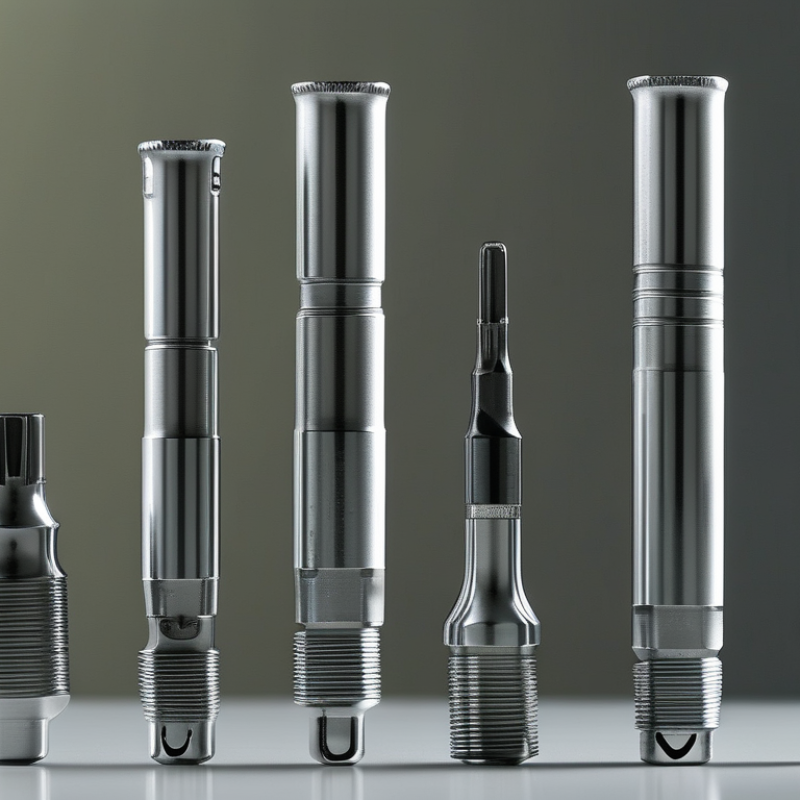
Top Intramedullary Nail Manufacturers for Global Buyers

Intramedullary Nail Types and Their Surgical Applications

Intramedullary nails stabilize long-bone fractures from inside the medullary canal. Their design must match the bone, fracture pattern, and surgical approach. Locked nails use screws at both ends to control rotation and shortening. They are common in unstable femoral and tibial fractures. Dynamic locking can permit controlled movement when healing conditions are favorable.

Femoral nails may be inserted antegrade or retrograde. Antegrade systems often support shaft and subtrochanteric fractures. Retrograde nails can help with distal femoral injuries or selected multiple-trauma cases.

Tibial nails are shaped for the narrower canal and proximal anatomy. Humeral nails require careful attention to shoulder function and radial nerve safety. Cephalomedullary nails support fractures extending into the femoral neck. Flexible nails remain useful in selected pediatric fractures.

Manufacturers serving global buyers should provide verified fatigue testing, sterile packaging controls, traceability, and clear sizing data. Their quality systems should support consistent production and documented risk management. Surgeons also need compatible instruments, reliable targeting guides, and practical training materials. A nail that looks suitable on paper may still perform poorly with difficult anatomy or limited imaging. That distinction matters. Device selection remains partly judgment-based, and no catalog can replace surgical planning, patient assessment, or current clinical evidence.

Key Criteria for Evaluating Global Nail Manufacturers

Global buyers should evaluate intramedullary nail manufacturers through evidence, not catalogue size. The WHO Global Status Report on Road Safety 2023 records about 1.19 million annual road deaths and 20–50 million nonfatal injuries. This burden creates steady trauma demand, but demand alone proves nothing. Ask for ISO 13485 certification, batch traceability, sterilization validation, and documented corrective-action records. Traceability matters.

Clinical evidence should match the nail’s indication, anatomy, and surgical technique. Request peer-reviewed studies, follow-up duration, revision rates, and complication definitions. A 2023 report from the International Society of Orthopaedic Surgery and Traumatology highlights the value of standardized outcomes in comparing trauma care. Manufacturers should explain material grades, fatigue testing, locking-hole tolerances, and corrosion controls in clear technical language. Avoid vague claims such as “premium strength.” Numbers are better.

Supply reliability deserves equal attention. Review lead times, lot-release procedures, packaging integrity, and complaint-response targets across several shipment cycles. The WHO Global Patient Safety Action Plan 2021–2030 emphasizes learning from adverse events and strengthening traceable healthcare systems. Buyers should therefore inspect post-market surveillance, recall procedures, and distributor training. A polished audit can still miss weak field support. I would score quality, evidence, service, and regulatory readiness separately, then revisit the score after real hospital feedback. No scorecard is perfect.

Top Intramedullary Nail Manufacturers for Global Buyers - Key Criteria for Evaluating Global Nail Manufacturers

Evaluation Dimension What Global Buyers Should Verify Objective Evidence or Reference Why It Matters Recommended Status
Quality Management System Confirm that the manufacturing site operates a documented medical-device quality management system covering design, production, inspection, nonconformity control and corrective action. Current ISO 13485 certificate, certificate scope, issuing body, manufacturing-site address and most recent surveillance or recertification date. Demonstrates that production and quality activities are managed through controlled, auditable processes. Required
Regulatory Authorization Check whether the exact nail, locking screw, instrument and packaging configuration is legally marketable in the destination country. Applicable approval, registration or conformity documentation for the target market; verify product identifiers, intended use and certificate validity. Regulatory status is product- and market-specific; a general company certificate does not automatically cover every implant configuration. Required
Product Standard Alignment Verify that the design and test plan address the requirements applicable to intramedullary fixation devices. Test and design documentation referencing ASTM F1264 where applicable, together with applicable national or regional requirements. A recognized technical reference improves consistency in mechanical evaluation and product comparison. Required
Material Specification Confirm the implant alloy, grade, condition, surface finish and compatibility with the intended clinical application. Material certificates, heat or lot numbers, chemical composition records and applicable material standards such as ASTM F136 or ASTM F138, when relevant. Material identity and traceability are essential for strength, corrosion resistance and biological safety. Required
Dimensional Compatibility Review nail diameters, lengths, curvature, locking-hole geometry, screw dimensions and instrument compatibility. Controlled technical drawings, tolerance tables, compatibility matrices and sample measurements from inspection reports. Accurate dimensions reduce intraoperative mismatch and help ensure that nails, screws and instruments function as a system. Required
Mechanical Performance Assess bending, torsion, fatigue, locking-interface and construct-level performance using representative worst-case configurations. Validated test protocols, raw or summarized results, acceptance criteria, sample configuration, test environment and laboratory qualification records. Intramedullary nails are load-bearing implants; mechanical evidence should reflect intended use rather than only nominal dimensions. Required
Design Verification and Validation Determine whether design inputs, risk controls, verification results and intended-use validation are linked in a controlled design history. Design verification and validation summaries, risk-management file and documented rationale for worst-case product selection. Shows that the finished device was evaluated against defined safety and performance requirements. Required
Biocompatibility Confirm that patient-contacting materials, coatings, residues and processing chemicals have been evaluated for the intended contact type and duration. Biological evaluation plan and report aligned with the ISO 10993 series, supported by material and processing information. Biological safety depends on the complete finished device, including surface treatment and manufacturing residues. Required
Sterilization and Packaging Establish whether products are supplied sterile or non-sterile, and verify sterilization validation, packaging integrity and shelf-life claims. Sterilization validation records, packaging validation, seal-integrity testing, labeling and shelf-life evidence aligned with applicable standards such as ISO 11135, ISO 11137 and ISO 11607. Packaging and sterilization controls protect device integrity and reduce contamination risks before use. Required
Traceability and UDI Readiness Check traceability from raw material and manufacturing lot through final release, shipment and post-market records. Lot or serial-number structure, inspection records, device history records, labeling controls and applicable unique-device-identification capability. Strong traceability supports recalls, complaint investigations and clinical follow-up. Required
Inspection and Metrology Review inspection equipment, calibration intervals, measurement uncertainty and acceptance criteria for critical features. Calibration certificates traceable to recognized national or international measurement standards, inspection plans and release records. Reliable measurement is necessary for controlling locking holes, thread features, curvature, surface finish and dimensional tolerances. Required
Surface Treatment and Cleanliness Verify passivation, polishing, coating or other surface treatments, including process controls and residue limits. Process specifications, validation reports, cleanliness testing, visual inspection criteria and evidence of control for each applicable product family. Surface condition can affect corrosion resistance, fatigue performance, particulate generation and biological response. High Priority
Supplier and Raw-Material Control Evaluate controls for titanium or stainless-steel suppliers, outsourced machining, coating, sterilization and special processes. Approved-supplier procedure, supplier qualification records, incoming inspection plan and change-notification process. Critical outsourced processes and material changes can directly affect implant safety and regulatory compliance. High Priority
Production Capacity Confirm available machining, finishing, inspection, packaging and sterilization capacity for the required product range and forecast volume. Capacity statement, production-flow description, equipment list, validated process availability and documented contingency arrangements. Capacity should support consistent supply without compromising inspection, release or change-control activities. High Priority
Lead Time and Inventory Policy Compare standard production lead time, sample lead time, safety-stock policy and response procedures for urgent replenishment. Written quotation with lead-time assumptions, order quantities, production calendar, shipping terms and stock policy. Predictable delivery is important because hospitals and distributors require complete implant-and-instrument sets. Commercial Review
Product Range and System Completeness Assess availability of nails, locking screws, end caps, targeting guides, extraction tools and other compatible instruments. Controlled product catalog, compatibility chart, technical drawings and documented configuration-management process. A complete, compatible system can simplify procurement, training, inventory management and operating-room preparation. High Priority
Complaint and Post-Market Control Review procedures for complaint intake, vigilance reporting, trend analysis, field actions and corrective actions. Complaint procedure, anonymized trend data, corrective-action process and defined reporting responsibilities for the target market. Effective post-market surveillance helps identify recurring issues and supports timely risk reduction. Required
Technical Support and Training Verify availability of surgical technique guides, instrument manuals, product training and multilingual technical support. Training materials, instrument instructions, technical-support contacts, response-time commitments and document revision control. Clear technical information supports correct selection, handling, implantation and instrument use. High Priority
Documentation and Change Control Confirm that drawings, specifications, labels, instructions and certificates are controlled and that customers receive advance notice of relevant changes. Document-control procedure, revision history, engineering-change process and customer notification policy. Controlled documentation prevents obsolete specifications from being used during purchasing, inspection or surgery. Required
Total Cost of Ownership Compare implant price together with instruments, validation samples, shipping, customs, training, replacement parts and regulatory support. Itemized quotation, Incoterms, payment terms, tooling charges, sample costs, service charges and estimated recurring expenses. The lowest unit price may not represent the lowest total procurement cost over the product lifecycle. Commercial Review

Use this table as a supplier due-diligence framework. Regulatory, clinical and technical requirements should be confirmed for the specific product configuration and destination market before purchase.

Leading Intramedullary Nail Manufacturers by Product Strengths

Top Intramedullary Nail Manufacturers for Global Buyers

Leading intramedullary nail manufacturers distinguish themselves through focused product strengths, not catalogue size alone. Experienced manufacturers offer nail systems for femoral, tibial, humeral, and other long-bone procedures. Their designs may include multiple diameters, lengths, locking options, and controlled curvature. These details support better anatomical matching during surgery.

Material selection also matters. Titanium alloys can reduce weight and improve imaging clarity, while stainless steel may provide familiar handling and dependable strength. Reliable manufacturers maintain consistent surface finishing, accurate locking holes, and clear radiographic markers. Instrumentation deserves equal attention. Well-organized trays, compatible targeting guides, and stable insertion tools can reduce operating-room delays. Small details matter.

Clinical experience should guide purchasing decisions. Manufacturers with strong technical teams often collect feedback from surgeons, engineers, and hospital staff. They use this information to refine targeting accuracy, screw compatibility, packaging, and instructions for use. Quality evidence may include validated testing, traceability records, and transparent performance data. Certification alone is not enough.

No product line is perfect. A lighter nail may not suit every fracture pattern, and a broad size range can complicate inventory control. Global buyers should compare mechanical data, training support, instrument durability, and after-sales responsiveness. Trial evaluation can reveal problems that brochures miss, especially with screw insertion and tray handling. That practical check is easy to overlook.

Top Intramedullary Nail Manufacturers for Global Buyers

Leading Intramedullary Nail Product Strengths by Typical Application

The chart compares representative implant diameter ranges commonly used for major intramedullary nailing applications. Larger diameter options generally support higher load-bearing requirements, while final selection depends on anatomy, fracture pattern, surgical technique, and the specific implant system. Ranges are general clinical references rather than manufacturer specifications.

Quality Standards and Regulatory Requirements for International Buyers

For global buyers, an intramedullary nail manufacturer must prove more than production capacity. A functioning quality management system is essential. The ISO Survey 2023 reported more than 30,000 ISO 13485 certificates worldwide, but certification alone does not prove product reliability. Buyers should examine audit findings, corrective-action records, supplier controls, and batch-release procedures. Evidence matters.

Technical files should identify material grades, coating controls, dimensional tolerances, and sterilization validation. ASTM F1264 provides relevant specifications for intramedullary fixation devices, while ISO 14971 supports documented risk management. ISO 10993 testing may also apply when implants contact tissue or bone. Ask for test methods, sample sizes, acceptance limits, and traceability from raw titanium to finished packaging. Vague answers deserve attention.

Regulatory expectations differ by market. The United States Quality Management System Regulation became effective in February 2026 and incorporates ISO 13485:2016. European buyers must assess EU MDR 2017/745 requirements, including clinical evaluation, post-market surveillance, and notified-body involvement where applicable. The European Union’s 2023/607 amendment extended some transition periods, but only under specific conditions. Classification cannot be assumed from product names. Even experienced procurement teams can over-trust polished certificates. A stronger review compares certificates with manufacturing sites, product scope, complaints, and recall history. No audit is perfect. The unanswered question often matters most.

How to Compare Suppliers and Select the Right Manufacturer

Top Intramedullary Nail Manufacturers for Global Buyers

Choosing an intramedullary nail manufacturer requires more than comparing prices. WHO’s Global Status Report on Road Safety 2023 estimates 20–50 million non-fatal injuries worldwide each year. Many involve long-bone trauma and require dependable fixation systems. Buyers should examine nail geometry, alloy certificates, locking-hole accuracy, fatigue testing, and instrument compatibility. Ask for test reports aligned with ASTM F1264, ISO 10993, and ISO 14971. A certificate alone proves little.

Review the supplier’s quality system, design history, batch traceability, and change-control process. ISO 13485 certification matters, but it should support real evidence. Request sterilization validation, packaging studies, shelf-life data, and complaint-response records. Compare production capacity with actual delivery performance, not optimistic quotations. Check whether each lot has measurable inspection results. Small details matter, such as thread damage inside a screw bag or unclear markings on a nail. I have seen polished documentation hide weak follow-up systems. That is worth questioning.

Tips: Build a weighted scorecard. Include clinical evidence, regulatory readiness, testing depth, lead time, and total cost. Request samples from different lots. Inspect the instruments physically. Ask for three recent nonconformity examples and their corrective actions. Do not accept vague answers. Also, compare evidence quality carefully; some suppliers provide extensive laboratory data but limited clinical experience. That gap may not disqualify them, but buyers should record it and review it with qualified orthopedic and regulatory professionals.

FAQS

: What is an intramedullary nail?

: It is a metal implant placed inside a long bone’s medullary canal. It stabilizes fractures from within. Simple, but not universal.

When are locked nails commonly used?

Locked nails use screws near both ends. They help control rotation, shortening, and unstable femoral or tibial fractures. Dynamic locking may allow controlled movement during healing.

Which nail types support femoral fractures?

Antegrade nails commonly support shaft and subtrochanteric fractures. Retrograde nails may suit distal femoral injuries or selected multiple-trauma cases. The surgical approach matters.

How do tibial and humeral nails differ?

Tibial nails fit a narrower canal and account for proximal anatomy. Humeral nails require careful shoulder-function planning and radial-nerve protection. Small anatomical differences matter.

What are cephalomedullary and flexible nails used for?

Cephalomedullary nails support fractures extending toward the femoral neck. Flexible nails remain useful for selected pediatric fractures. Age and fracture pattern guide selection.

Which product details should buyers compare?

Compare diameters, lengths, curvature, locking options, and alloy information. Also inspect targeting guides, insertion tools, and tray organization. A wider range can complicate inventory.

What quality evidence should a supplier provide?

Request fatigue testing, traceability records, sterilization validation, and packaging studies. Review shelf-life data, inspection results, and change-control procedures. Certification alone is not enough.

How can buyers test a supplier before purchasing?

Use a weighted scorecard covering clinical evidence, testing, delivery, and total cost. Request samples from different lots and inspect instruments physically. Ask for recent nonconformities and corrective actions. Brochures can hide practical problems.

Conclusion

This guide presents a practical overview of the Intramedullary Nail market for global buyers. It explains the main nail types, including standard, cephalomedullary, and expandable designs, and outlines their typical surgical applications in treating long-bone fractures. It also identifies the core factors used to evaluate manufacturers, such as material quality, design consistency, production capacity, customization capability, clinical support, and supply reliability.

The article further discusses the quality systems and regulatory documentation international buyers should review before placing orders, including manufacturing controls, product traceability, sterilization information, and market-specific approvals. To support informed purchasing decisions, it compares suppliers by product strengths rather than brand reputation alone. Buyers can use these criteria to assess technical performance, compliance readiness, communication, delivery capability, and after-sales service, helping them select a dependable manufacturer that matches their clinical requirements, target markets, and long-term procurement plans.

Ethan

Ethan

Ethan is a seasoned marketing professional with a deep expertise in our company's innovative product line. With a passion for sharing knowledge and insights, he takes the lead in regularly updating our corporate blog, where he explores industry trends, product features, and effective marketing......