Ease Medical Apparatus And Instruments
Choosing the right External Fixation Implant is a clinical decision, not a simple product comparison. The best construct must match the patient’s injury, bone quality, soft-tissue condition, and expected healing demands. A frame that looks strong on a catalogue page may perform poorly around fragile skin or an irregular fracture.
Gavriil Ilizarov, whose work transformed limb reconstruction, described the guiding principle clearly: “The tension-stress effect is the basis of tissue regeneration.” His observation remains relevant when surgeons assess controlled stability, gradual correction, and biological preservation. However, stability alone is not enough. Pin diameter, thread design, material strength, clamp versatility, radiographic visibility, and ease of adjustment all influence daily treatment. The surgeon must also consider pin-tract care, patient mobility, imaging access, and the manufacturer’s validated instructions for use.
Small details matter. A clamp that is difficult to tighten can compromise alignment. A bulky frame may restrict clothing, sleep, or rehabilitation. These practical problems are easy to underestimate.
Clinical evidence matters most.
Experience should guide judgment, not replace it. Surgeons should compare published data, institutional outcomes, and the specific implant’s regulatory documentation. No selection is flawless. Even a carefully planned External Fixation Implant can require adjustment as swelling changes, soft tissues recover, or healing progresses. This article will examine the main selection criteria and the questions clinicians should ask before applying a frame. The goal is not to promote one system, but to support safer, more reasoned decisions.
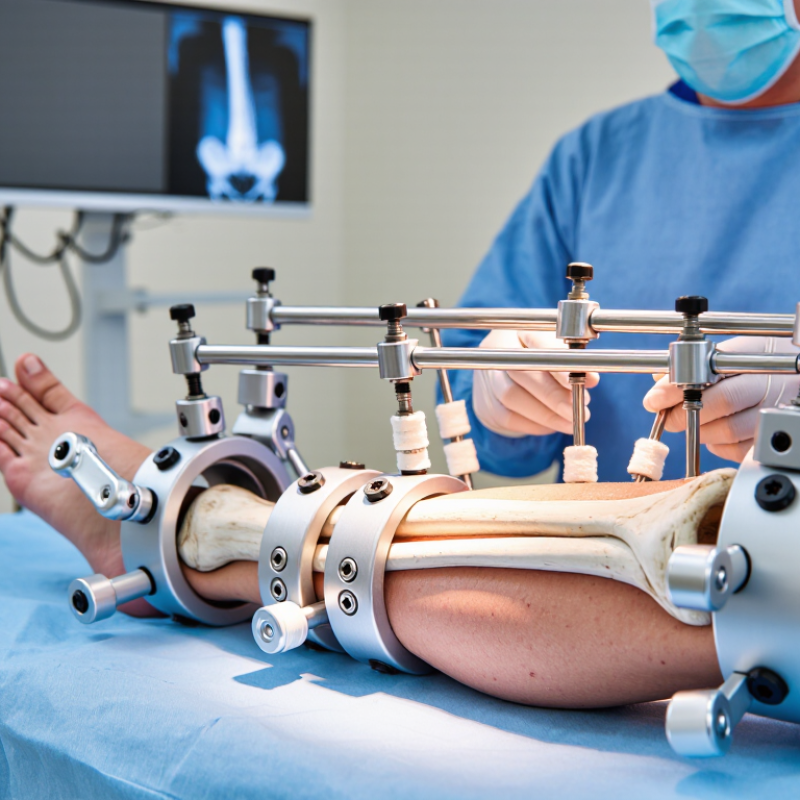
How to Choose the Right External Fixation Implant?
Choosing the right external fixation implant starts with the injury, not the frame’s appearance. External fixation provides temporary or definitive stability when soft tissues need protection. Its main types include unilateral frames, circular frames, hybrid frames, and articulated systems. A unilateral frame uses pins connected by rods. Circular frames use rings, tensioned wires, or thin pins. Hybrid designs combine these features. Articulated frames may preserve controlled movement near a joint. The choice depends on fracture pattern, bone quality, swelling, infection risk, and planned treatment duration. Looks can mislead.
Each construct has a practical job. Pins or wires anchor the implant to bone. Clamps connect them to rods, rings, or struts. Rods resist bending and translation, while rings distribute forces around a limb. Hinges can guide motion when stability and mobility must coexist. Some systems allow gradual correction through adjustable struts. Proper pin diameter, safe corridors, and spacing matter. The strongest component cannot compensate for poor placement. This is where judgment matters.
Selection should follow imaging, vascular assessment, soft-tissue findings, and the surgeon’s treatment plan. A frame must permit wound access, dressing changes, and repeat procedures. It should also match the patient’s mobility, tolerance, and follow-up access. In practice, lighter is not always better, and more hardware is not always safer. Pin-site care and scheduled reviews remain essential. I would question any design chosen only for convenience. Small changes in alignment, swelling, or drainage can alter the plan. Final decisions belong to a qualified orthopedic team using current clinical evidence and local regulations.
External Fixation Implants: Types, Components, and Basic Functions
The chart shows representative diameter ranges commonly used in adult external fixation constructs. Half-pins provide bone purchase, tensioned wires support ring frames, and connecting rods transfer loads between fixation points. Actual selection depends on bone quality, fracture pattern, patient anatomy, frame configuration, soft-tissue conditions, and the treating surgeon’s protocol.
Diameter ranges are representative educational values, not a universal sizing guide. Implant dimensions vary by fixation system, anatomy, and clinical indication.
Selecting an external fixation implant requires more than matching hardware to a fracture. The patient’s anatomy, injury pattern, and treatment goals must guide the decision. Start with clear radiographs and, when needed, CT imaging. Examine soft-tissue damage carefully. A swollen limb, open wound, or compromised skin can change safe pin placement. Bone quality also matters, especially in older patients or those with metabolic conditions.
Frame stability should support healing without creating unnecessary bulk. Complex fractures may need stronger fixation and greater adjustability. However, maximum stiffness is not always the best choice. Excessive rigidity can limit useful loading during rehabilitation. Pin diameter, trajectory, spacing, and distance from the fracture all influence mechanical performance. Infection risk, vascular status, and the patient’s ability to attend follow-up visits deserve equal attention. A technically sound implant can still fail when daily care is unrealistic.
Discuss the plan with the surgical and rehabilitation team. Mark safe corridors before surgery. Keep pins away from injured soft tissue when possible. Consider the patient’s work, mobility, and home support. Teach pin-site care with simple, written instructions. Reassess alignment and loosening during follow-up. No implant is perfect. A plan may look strong on paper but prove inconvenient in practice. Clinical judgment should remain flexible, evidence-informed, and documented according to local protocols.
Choosing an external fixation implant starts with the injury, not the catalog. A circular frame can provide multiplanar stability and gradual correction. A unilateral frame is usually faster to apply and easier for daily access. A hybrid design may balance both needs. However, soft-tissue condition, fracture location, bone quality, and expected loading should guide the decision. The best frame is rarely the most complicated one.
Pin placement matters as much as frame geometry. Experienced teams assess safe corridors, neurovascular structures, swelling, and future surgical access. A 2022 systematic review in Injury reported pin-site infection rates commonly ranging from 10% to 40%, depending on definitions and care protocols. That range is uncomfortable. It shows that implant performance cannot be separated from surgical technique and follow-up. Hydroxyapatite-coated pins may reduce loosening in selected cases, but evidence remains inconsistent.
Compare fixation methods through measurable needs. Ask how much stiffness is required, how easily alignment can be adjusted, and whether the patient can bear weight safely. The 2023 National Trauma Data Bank Annual Report confirms the continuing scale and complexity of serious musculoskeletal trauma in the United States. Yet large databases rarely capture frame usability or patient burden well. FDA MAUDE data also warn against treating event reports as incidence rates. Practical trials, radiographic follow-up, and patient experience still matter. A frame that looks efficient in theatre may become difficult at home. That detail is easy to underestimate.
Choosing an external fixation implant begins with the patient, not the catalog.
The Global Burden of Disease 2019 study reported about 178 million new fractures worldwide. Trauma complexity is growing. Material affects weight, imaging, stiffness, and pin behavior. Stainless steel offers strength and familiar handling. Titanium may reduce weight and improve corrosion resistance. Carbon-fiber rods can improve radiographic visibility. Yet, material alone never guarantees better healing.
Size must match bone diameter, soft-tissue swelling, and the planned loading pattern. A frame placed too close can compress swollen skin. A frame placed too far may lose mechanical control.
Pin diameter, rod thickness, clamp range, and thread design must work together. AO Foundation guidance emphasizes stable fixation while protecting soft tissues and future surgical access.
Compatibility deserves equal attention. Mixing connectors from different systems can create uncertain fit, torque, or sterilization responsibilities. The FDA’s orthopedic device guidance also supports documented biocompatibility and mechanical performance.
Tips:
Record the patient’s weight, bone quality, circulation, diabetes status, smoking history, and expected mobility. Check imaging access before surgery. Confirm every clamp and pin interface. Recheck the plan after swelling changes.
A perfect frame on paper can still fail in a changing limb. The WHO Global Status Report on Road Safety 2023 estimates 1.19 million annual road deaths, reminding teams that urgent trauma care often occurs under pressure.
I would not treat the lightest frame as the best frame. Patient anatomy, compatibility, and follow-up capacity should decide.
Choosing an external fixation implant requires more than checking frame strength. Safety begins with stable fixation and controlled soft-tissue pressure. Pin diameter, thread design, material compatibility, and clamp security all affect performance. Published systematic reviews in Injury report pin-track infection rates ranging from below 10% to above 50%. Definitions differ, so the figures deserve caution. Still, the warning is real.
Long-term care determines whether a technically sound construct remains safe. NICE guideline NG37 recommends regular neurovascular assessment, wound review, and planned follow-up for complex fractures. Inspect each pin site for warmth, drainage, loosening, or increasing pain. Keep dressings practical. Patients may struggle with bulky frames, especially near the knee or ankle. That detail is often underestimated. Early education should include cleaning technique, warning signs, weight-bearing limits, and contact instructions.
Performance should also be judged during imaging and adjustment. Radiolucent components can improve fracture monitoring, while corrosion resistance supports repeated cleaning and prolonged use. ISO 10993 guidance remains relevant when evaluating biological safety for patient-contacting materials. Clinicians should review manufacturer testing, fatigue data, sterilization instructions, and post-market safety signals before selection. The FDA’s device surveillance system shows why vigilance matters: uncommon failures may appear only after wider clinical use. No implant eliminates infection risk. Patient compliance varies. The plan may need revision.
| Evaluation Dimension | Common Implant or Frame Option | Typical Performance Characteristics | Safety Considerations | Long-Term Care Requirements |
|---|---|---|---|---|
| Primary clinical purpose | Temporary stabilization, definitive treatment, staged reconstruction, or limb lengthening | The frame should maintain alignment and provide sufficient stability while soft tissues heal or definitive fixation is planned. | Treatment goals should be defined before implantation; an external frame is not automatically appropriate for every fracture or soft-tissue condition. | Scheduled radiographs, wound review, rehabilitation, and a documented plan for frame adjustment or removal are required. |
| Frame configuration | Unilateral unilateral-bar frame, circular ring frame, hybrid frame, or modular frame | Unilateral frames can offer faster application and easier access to soft tissues. Circular and hybrid frames can provide multiplanar support and fine adjustment. | The configuration must avoid excessive soft-tissue tension, neurovascular structures, and planned surgical approaches. | Patients require training on frame protection, clothing, transfers, and safe movement around the construct. |
| Fixation element | Threaded half-pin, smooth wire, tensioned wire, or hydroxyapatite-coated pin | Half-pins provide strong direct fixation. Tensioned wires can support multiplanar fixation and may be useful where bone corridors are limited. | Pin or wire placement must respect safe anatomical corridors and minimize the risk of tendon, nerve, vessel, and joint injury. | Pin sites should be inspected regularly for drainage, increasing pain, erythema, swelling, or loosening. |
| Implant material | Medical-grade stainless steel, titanium alloy, or carbon-fiber-reinforced polymer components | Metal components generally provide high strength. Carbon-fiber-reinforced components can reduce radiographic obstruction and may improve visualization of the fracture area. | Material selection should consider corrosion resistance, mechanical compatibility, allergies, cleaning requirements, and compatibility with planned imaging. | Damaged, corroded, bent, or loose components should be assessed promptly and replaced when clinically indicated. |
| Mechanical stability | Rigid, dynamic, or adjustable frame construct | Stiffness is influenced by pin diameter, pin spread, working distance from bone, frame geometry, ring diameter, wire tension, and connector security. | An overly flexible construct may permit excessive motion and loss of alignment; an overly rigid construct may reduce beneficial mechanical stimulation and increase stress concentration. | Follow-up imaging is used to confirm alignment, callus development, component integrity, and readiness for controlled progression of loading. |
| Pin-site infection risk | Any percutaneous pin or wire construct | Superficial pin-site irritation is relatively common; deep infection, osteomyelitis, and pin loosening are less common but clinically important complications. | Risk increases with poor soft-tissue handling, excessive motion, loosening, inadequate hygiene, smoking, and compromised host biology. | Use the treating team's pin-care protocol. Fever, spreading redness, purulent drainage, worsening pain, or sudden instability requires prompt clinical assessment. |
| Soft-tissue and wound access | Open modular frame or ring-based construct | External fixation allows access to wounds, flap sites, burns, and areas requiring repeated debridement or dressing changes. | Bars, rings, and pins must not obstruct wound care or compromise flap perfusion and swelling management. | Wound care, edema control, dressing changes, and coordinated review by orthopedic and soft-tissue teams may be necessary. |
| Bone quality | Standard pins, larger-diameter pins, coated pins, or multiplanar wire fixation | Poor or osteoporotic bone may require optimized pin distribution, greater working fixation length, or a multiplanar construct to improve purchase. | Pin insertion torque and placement technique must avoid thermal injury, cracking, and loss of fixation. | Monitor for progressive loosening, migration, pain with loading, and radiographic loss of fixation. |
| Imaging compatibility | Radiopaque metal frame or radiolucent composite frame | Radiolucent components can improve visualization of the fracture and callus on radiographs; metal components may create imaging artifacts. | MRI safety depends on the complete construct, material, configuration, and local MRI policy; the implant must be evaluated before scanning. | Maintain an accurate implant record, including material and component configuration, for future radiology and surgical planning. |
| Patient mobility | Load-sharing or load-bearing external fixation construct | Early mobilization may be possible when fracture stability, soft-tissue status, and patient condition permit; weight-bearing must be prescribed individually. | Unapproved weight-bearing can cause loss of alignment, pin loosening, frame deformation, or fracture displacement. | Physical therapy should address gait, joint range of motion, muscle strength, balance, and safe use of walking aids. |
| Adjustability | Modular or computer-assisted adjustable frame | Adjustable systems can support gradual correction of translation, angulation, rotation, or length under specialist supervision. | Adjustments must follow a validated prescription; incorrect strut or connector changes can worsen deformity or soft-tissue pressure. | Patients need written adjustment instructions, scheduled reviews, and a reliable method for reporting pain, swelling, or neurovascular symptoms. |
| Removal planning | Temporary frame or definitive external fixation construct | Removal is considered when clinical and radiographic healing provide adequate stability, or when staged internal fixation is planned. | Premature removal can result in refracture or loss of correction; prolonged retention can increase pin-site and soft-tissue complications. | After removal, protect the limb as directed and continue rehabilitation; monitor for wound problems, refracture, and reduced joint motion. |
| Overall selection priority | Patient-specific construct selected by the orthopedic trauma or limb-reconstruction team | The best implant balances adequate stability, soft-tissue access, anatomical safety, imaging needs, adjustability, and the patient's rehabilitation goals. | No single frame is safest or most effective for every injury. Patient health, fracture pattern, vascular status, contamination, bone quality, and surgeon experience must be considered together. | Long-term outcomes depend on follow-up attendance, pin-site care, nutrition, smoking cessation, prescribed loading, rehabilitation, and timely management of complications. |
Clinical note: Implant selection, weight-bearing, frame adjustment, pin-site treatment, imaging, and removal should be determined by a qualified orthopedic clinician based on the individual patient's injury and medical condition.
Start with the patient’s anatomy, fracture pattern, soft-tissue condition, and treatment goals. Review clear radiographs and use CT when fracture details remain unclear. No implant is perfect. The plan may need revision after swelling changes.
Swelling, open wounds, and fragile skin can restrict safe pin corridors. Keep pins away from injured tissue whenever possible. Mark safe paths before surgery. Protect future surgical access too.
Circular frames support multiplanar stability and gradual correction. Unilateral frames are usually quicker to apply and easier to access daily. Hybrid frames may balance stability and convenience. The simplest suitable design is often better than unnecessary complexity.
Fixation should control the fracture while allowing useful rehabilitation loading. Maximum stiffness is not always ideal. Excessive rigidity may limit movement and weight-bearing progress. Measure twice. Then reassess during healing.
Pin diameter, spacing, trajectory, and fracture distance influence mechanical control. A frame placed too close may press against swollen skin. A frame placed too far may lose stability. Bone diameter and soft-tissue depth must both be considered.
Material affects weight, imaging visibility, stiffness, corrosion resistance, and handling. Some materials may improve radiographic visibility or reduce frame weight. Material alone does not guarantee better healing. The overall construct matters more.
Confirm that pins, rods, clamps, and connectors fit together correctly. Mixed components may create uncertain fit, torque, or sterilization responsibilities. Check every interface before use. Small mismatches can become serious problems.
Consider body weight, bone quality, circulation, diabetes, smoking history, mobility, and home support. Ask whether the patient can attend follow-up visits and perform pin-site care. Written instructions should use simple steps. A technically strong frame may still fail at home.
Reassess alignment, pin loosening, infection signs, swelling, and rehabilitation progress. Pin-site infection rates vary with definitions and care protocols. Evidence about some specialized pin coatings remains inconsistent. Clinical judgment should stay flexible. Document changes according to local protocols.
Choosing the right External Fixation Implant requires a clear understanding of how external fixation systems work and how their components support bone stability, alignment, and healing. Common systems may include pins, wires, clamps, connecting rods, and adjustable frames, with each part contributing to the overall fixation strategy. Selection should be guided by the injury pattern, bone quality, soft-tissue condition, anatomical location, infection risk, and the expected duration of treatment.
Frame design and fixation methods should be compared according to stability, adjustability, surgical access, patient comfort, and ease of postoperative management. Material strength, implant size, connector compatibility, and imaging requirements are also important, especially when treatment must be adapted to a patient’s anatomy, age, activity level, or future surgical plans. Finally, clinicians should evaluate safety, mechanical performance, pin-site care, maintenance needs, and the possibility of later adjustment or removal. A well-matched implant can support effective healing while reducing complications and improving long-term patient care.
