Ease Medical Apparatus And Instruments Ease Medical Apparatus And Instruments

Top 10 Cannulated Screw Instrument Sets for Global Buyers

Time:2026-11-06 Author:Oliver
0%

A Cannulated Screw Instrument set is judged at the operating table, not by its catalog photograph. The guidewire must pass smoothly; the drill, depth gauge, and driver must work together. A small mismatch can slow a procedure. Details matter.

The World Health Organization’s 2022 musculoskeletal health report estimates that 1.71 billion people live with musculoskeletal conditions worldwide. This figure describes a broad health burden, not demand for cannulated screws. Still, it helps explain why dependable fracture-fixation tools matter across diverse clinical settings. Buyers also face practical differences: screw diameters, tray layout, sterilization workflow, instrument compatibility, and access to replacement parts. Global market reports vary in scope, so product comparisons should distinguish verified specifications from promotional claims.

A useful technical reference is AO Surgery Reference, which presents fracture-fixation principles for clinical teams. I cannot verify a verbatim statement from a named specialist specifically about selecting cannulated screw instrument sets, so I will not invent one. That restraint matters. This guide instead compares set contents, materials, compatibility information, and supplier documentation against transparent purchasing criteria. It is not a substitute for clinical judgment or local procurement review. Some listings may look complete, yet omit a key driver or guidewire size. Check the details.
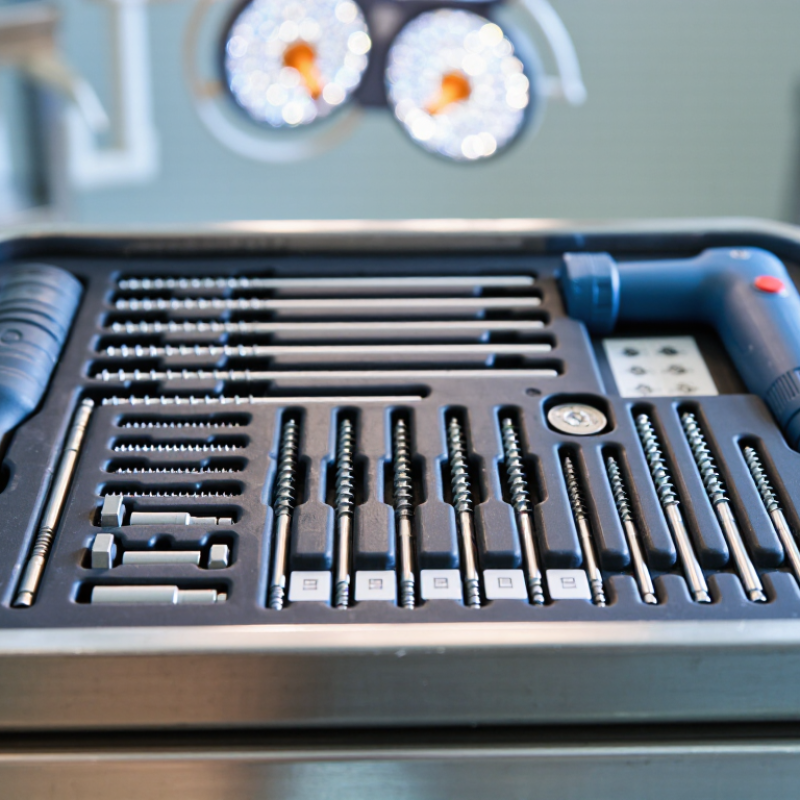
Top 10 Cannulated Screw Instrument Sets for Global Buyers

What Cannulated Screw Instrument Sets Are and How They Are Used

A cannulated screw instrument set is designed to place screws over a guide wire. The wire helps the surgeon establish a planned path before drilling and insertion. A typical set may include guide wires, a cannulated drill, depth gauge, countersink, screwdriver, and protective sleeves. Each part has a practical role. The depth gauge, for example, helps select a screw length that fits the measured bone.

During use, the surgeon positions a guide wire under imaging, checks its direction, then advances the drill and screw along the wire. The hollow center of the screw allows this sequence. Fluoroscopy can help confirm alignment, but it does not remove the need for careful handling. Small details matter. A bent wire or poorly matched driver can disrupt an otherwise controlled workflow. Exact steps vary by anatomy, procedure, and the device’s instructions for use.

Market context is broader than cannulated screws alone. Grand View Research estimated the global orthopedic devices market at USD 48.6 billion in 2023 and projected 4.2% annual growth from 2024 to 2030. This report does not isolate instrument sets, so it should not be read as a direct demand forecast for them. For global buyers, a clear tray layout, durable markings, and compatible components are useful evaluation points. Yet a well-organized set cannot replace trained users; that distinction is easy to overlook.

How Cannulated Screw Systems Support Guided Bone Fixation

Cannulated screw systems guide fixation through a hollow screw placed over a temporary guide wire. The wire sets the path before drilling, tapping, and screw insertion. A radiolucent sleeve can steady instruments while fluoroscopy checks alignment in two views. Small details matter. A measured depth, stable wire, and suitable screw length can limit repeated passes and soft-tissue disruption. Yet the wire can bend or drift, especially in dense bone or a narrow target. Guidance reduces guesswork; it does not replace anatomical judgment.

The clinical need is substantial. The GBD 2019 Fracture Collaborators estimated 178 million new fractures worldwide in 2019, with a 95% uncertainty interval of 162–196 million. Their 2021 analysis appeared in The Lancet Healthy Longevity. That burden spans different bones, patients, and operating settings. For buyers, a useful set should include graduated depth gauges, matching drill sleeves, reliable wire control, and accessible cleaning points. Instrument compatibility matters under pressure. So does training. A cannulated system can help make a planned trajectory reproducible, but imaging quality, bone quality, and surgical technique still shape the result. One limitation is easy to overlook: extra instruments may slow setup when tray layout is unclear. Teams should assess the complete workflow, not just screw specifications.

Top 10 Cannulated Screw Instrument Sets for Global Buyers - How Cannulated Screw Systems Support Guided Bone Fixation

The categories below represent common cannulated screw system configurations, not a ranked list of specific products. Screw and guidewire dimensions are representative; compatibility, indications, and included instruments vary by system. Always confirm sizing and technique against the implant’s instructions for use.

No. Instrument set category Typical screw diameter Guidewire selection Common fixation use Typical instruments and guided-fixation support
1 Mini-fragment cannulated set Approximately 2.0–2.4 mm System-matched small-diameter wire; some systems use wires around 0.8–1.0 mm Selected small-bone and small-fragment fixation, depending on the implant and indication Guidewires, drill sleeves, cannulated drill bits, depth gauge, and driver help maintain a planned path and measure screw length.
2 Small-fragment cannulated set Approximately 3.0–3.5 mm System-matched wire; commonly around 1.1–1.6 mm, depending on screw design Selected small-fragment fractures and osteotomies Wire, sleeve, cannulated drill, depth gauge, and screwdriver support wire-first placement followed by drilling and screw insertion.
3 4.0 mm cancellous screw set Approximately 4.0 mm Use the wire diameter specified for the selected screw; size varies by system Selected cancellous-bone fixation, including some small-bone or periarticular applications Cannulated drill and driver, depth gauge, and optional countersink or tap support preparation and controlled insertion over the wire.
4 Large-fragment cannulated set Approximately 4.5–5.0 mm System-matched wire; some designs use wires around 1.6–2.0 mm Selected larger-fragment fractures and osteotomies Guidewire, protective sleeve, cannulated drill, depth gauge, and driver allow drilling and insertion along the established trajectory.
5 6.5 mm partially threaded screw set Approximately 6.5 mm System-matched larger guidewire; commonly about 2.0–2.8 mm across different designs Selected cancellous-bone fixation where a lag-screw technique is appropriate Guidewire, cannulated drill, depth gauge, and driver support trajectory control and screw-length selection; a washer may be available in some systems.
6 7.0–7.3 mm large-diameter screw set Approximately 7.0–7.3 mm Larger system-specific guidewire; some designs use wires around 2.8 mm Selected large-bone or pelvic fixation applications, subject to the implant’s indication Long guidewires, sleeves, cannulated drills, depth gauge, and driver support placement over a wire; imaging is commonly used to check position.
7 Headless compression screw set Varies by system; commonly spans small- to large-fragment sizes Matched to the specific screw diameter and cannulation Selected fractures or osteotomies where a buried, headless screw design is appropriate Guidewire, measuring gauge, cannulated drill or preparation tools, and a compatible driver help position the screw beneath the bone surface.
8 Cannulated lag-screw set Varies by system and intended bone Matched to the selected lag screw and its instrumentation Selected fractures where interfragmentary compression is intended and the technique is indicated May include guidewire, glide-hole drill, thread-hole drill, depth gauge, and driver. A lag technique requires appropriate preparation of the near fragment.
9 Pediatric/adolescent hip screw set System- and patient-specific; do not infer size from age alone Use the guidewire specified for the implant and technique Selected hip fixation procedures, including some cases of slipped capital femoral epiphysis, when clinically indicated Guidewire, aiming or protection sleeves, depth gauge, drill, and driver support controlled placement; imaging and patient-specific planning are important.
10 Modular multi-diameter cannulated set Multiple sizes, often spanning small- and large-fragment options Separate, clearly identified wires matched to each screw family Facilities seeking one organized platform for a range of compatible procedures A modular tray may organize color- or size-coded wires, drills, sleeves, gauges, taps, and drivers. Verify cross-compatibility rather than assuming components are interchangeable.

Guided fixation workflow: establish and verify the guidewire trajectory, measure the required screw length, prepare the bone as directed, and advance the cannulated screw over the wire. Imaging, instrument compatibility, sterilization requirements, and the applicable instructions for use should be checked for each procedure.

Key Instruments and Components Found in a Complete Set

A complete cannulated screw instrument set should support each step, from guidewire placement to final tightening. Typical components include guidewires, cannulated drill bits, a depth gauge, a countersink, and a cannulated screwdriver. Many sets also include wire drivers, drill sleeves, tissue-protection sleeves, and extraction tools. Sizes and configurations vary by screw system, so buyers should check compatibility rather than assume parts are interchangeable.

The scale of fracture care adds context: the GBD 2019 Fracture Collaborators estimated 178 million new fractures worldwide in 2019 (Lancet Healthy Longevity, 2021). For procurement teams, that makes clear labeling and dependable instrument availability practical priorities. A tray should separate wire sizes, show drill-bit diameters, and secure delicate tips during transport. Small parts matter. In practice, a checklist can still miss a component; verify the set against the intended screw range and surgical workflow.

Tips: Confirm that the depth gauge covers the required measurement range, and test that each screwdriver engages the screw head securely. Inspect guidewires for bends before use. Keep spare wires available, but avoid adding tools that staff cannot identify or maintain.

How Global Buyers Can Compare Compatibility, Quality, and Service

For global buyers, comparing cannulated screw instrument sets starts with compatibility, not the number of pieces in the tray. Check the intended screw diameters, guide-wire sizes, driver connections, and depth-gauge range against your existing inventory. Fit matters. A small mismatch can slow setup or require extra instruments. Ask for dimensional drawings and clear instructions for use, then have clinical and technical staff review them together.

Quality is more than a polished finish. Inspect the tray layout, instrument markings, joints, and the feel of the driver under routine handling. Request material specifications, inspection records, and traceability details where available. Confirm that cleaning and sterilization guidance suits your facility’s validated processes. Test it. A catalog can look complete while leaving gaps; compatibility with a particular screw system should never be assumed from appearance alone.

Service also deserves a practical check. Ask how replacement parts are identified, how quickly technical questions receive answers, and whether training materials are available in usable formats. For international supply, clarify packaging, delivery estimates, and what happens if an instrument arrives damaged or incomplete. These details may seem ordinary, yet they affect readiness. I would compare suppliers using a short checklist and record unanswered questions, rather than relying on a single demonstration or a low initial price.

Profiles of Ten Cannulated Screw Instrument Sets for Global Buyers

Profile one is a compact set for small-bone fixation, with short guide wires and a matching driver.

Profile two supports long-bone work, using longer wires, sleeves, and depth measurement.

Profile three centers on lag-screw insertion, adding countersinks and taps.

Profile four prioritizes wire control, with multiple lengths and wire-passing tools.

Profile five pairs protective sleeves with instruments suited to limited-access approaches.

Profile six covers varied screw diameters with matching drills and drivers.

Profile seven adds reduction tools for maintaining alignment during insertion.

Profile eight emphasizes foot-and-ankle access with compact handles.

Profile nine is a modular configuration for facilities managing several procedure types.

Profile ten focuses on organized trays, clear size markings, and reprocessing workflows.

Selection deserves careful scrutiny. The World Health Organization’s 2022 musculoskeletal conditions fact sheet estimates that 1.71 billion people live with these conditions worldwide; this broad burden does not predict demand for any specific screw set. For buyers, practical checks include wire-to-screw compatibility, instrument reach, corrosion-resistant materials, and replacement-part availability. Handle the tray, if possible. Does every tool have a clearly marked home? A polished catalogue may not show awkward access or confusing size markings. Confirm reusable-device processing instructions against ISO 17664-1:2021 and the supplier’s documentation. One detail is easy to miss: a broad set can increase inventory and cleaning workload without improving day-to-day fit.

FAQS

How does a cannulated screw system guide fixation?

A temporary guidewire sets the path. The hollow screw advances over it after drilling and measurement. Guidance helps, but does not replace anatomical judgment.

Which instruments are commonly included in a complete set?

Sets may include guidewires, cannulated drill bits, sleeves, a depth gauge, countersink, and screwdriver. Some include wire drivers and extraction tools. Small parts matter.

How can teams check compatibility before purchasing?

Compare screw diameters, guidewire sizes, driver connections, and depth-gauge range with existing inventory. Request dimensional drawings. Appearance alone can mislead.

What should teams inspect in the tray?

Check clear labels, separated wire sizes, marked drill bits, and secure storage for delicate tips. A checklist helps, though it can still miss something.

Why is guidewire condition important?

A bent or drifting wire may change the planned trajectory. Inspect wires before use and keep suitable spares available. Fit matters.

What should buyers ask about cleaning and sterilization?

Request instructions and confirm they suit the facility’s validated processes. Check accessible cleaning points. I might overlook how much this affects daily readiness.

How can buyers assess quality beyond appearance?

Review markings, joints, driver engagement, material specifications, and inspection records where available. Test instruments under routine handling. A polished finish proves little.

What service details should international buyers confirm?

Ask about replacement-part identification, technical response times, training materials, packaging, delivery estimates, and damaged or incomplete shipments. Record unanswered questions before deciding.

Conclusion

This article explains what a Cannulated Screw Instrument set is and how it supports guided bone fixation. It outlines how a guide wire helps direct screw placement and describes the instruments commonly included in a complete set, such as drill guides, depth gauges, taps, drivers, and related accessories. The overview also considers how instrument design and workflow can help clinicians achieve accurate, consistent placement during procedures.

For global buyers, the article presents practical factors for comparing sets, including compatibility with screw sizes and guide wires, material quality, manufacturing consistency, documentation, availability of replacement components, and supplier service. It concludes with profiles of ten types of Cannulated Screw Instrument sets, highlighting their intended applications and distinguishing features to help readers assess options according to clinical needs, purchasing requirements, and support expectations.

Oliver

Oliver

Oliver is a seasoned marketing professional with a wealth of expertise in driving brand awareness and engagement. With a deep understanding of our company's product offerings, he consistently delivers high-quality content that enriches our professional blog. His insights not only shed light on......